
Biological Age: A Strategic Framework for Reversing Cellular Decline
Executive Summary
- The purpose of this guide is to provide a structured, evidence-based approach to measuring and reducing your biological age. While chronological age is a fixed metric based on your date of birth, biological age—often referred to as “phenotypic age”—reflects the functional state of your cells, tissues, and organ systems.
Recent breakthroughs in epigenetics and geroscience have demonstrated that biological aging is plastic. By utilizing specific lifestyle interventions, we can influence “epigenetic clocks” and blood-based biomarkers to slow, or in some cases, partially reverse the aging process.
This guide outlines:
- The difference between chronological and biological aging.
- The primary diagnostic tools for measuring cellular decay.
- Pragmatic protocols to optimize “longevity genes” such as Sirtuins and FOXO3
- A weekly execution plan to maintain a “youthful” biological profile.
Introduction: Managing Your Biological Depreciation
Thank you for your interest in the metrics of longevity. In professional management, we understand that “what gets measured gets managed.” For decades, aging was viewed as an unquantifiable “black box.” Today, we can measure the rate at which you are aging with remarkable precision.
Why Biological Age Matters
Two individuals, both aged 50, can have vastly different health profiles. One may have the cellular markers of a 35-year-old, while the other functions like a 65-year-old. This “gap” is determined by your epigenetic expression—the way your environment and habits turn certain genes on or off.
The Goal: Deceleration
Our objective is to slow your “pace of aging” (measured by tools like the DunedinPACE clock) so that for every chronological year that passes, your body only experiences a fraction of that aging biologically.
The Science of Biological Aging: The Epigenetic Clock
To reduce biological age, we must address the fundamental unit of aging: the Epigenome. Think of your DNA as the “hardware” and your epigenome as the “software” that tells the hardware what to do.
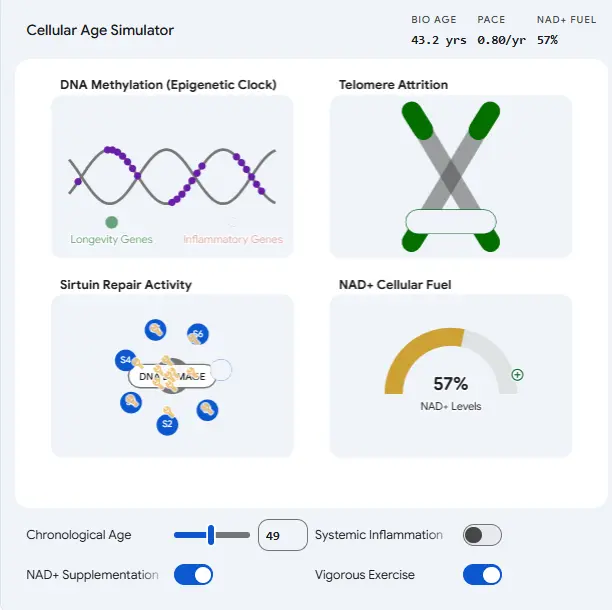
1. DNA Methylation (The “Dimmer Switch”)
As we age, small chemical tags called methyl groups attach to our DNA. These tags act like dimmer switches, silencing “good” genes (like tumor suppressors) or activating “bad” genes (like inflammatory cytokines). Epigenetic clocks, such as the Horvath Clock, measure these methylation patterns to estimate your true biological age.
2. Telomere Attrition
Telomeres are protective caps at the end of your chromosomes. Every time a cell divides, the telomeres shorten. When they become too short, the cell becomes senescent (a “zombie cell”). While telomere length is only one piece of the puzzle, maintaining them is a key component of cellular longevity.
3. The Role of Sirtuins and NAD+
Sirtuins are a family of seven proteins that act as “cellular CEOs.” They coordinate DNA repair and metabolic health. However, Sirtuins require a co-enzyme called NAD+ to function. NAD+ levels naturally decline by about 50% every 20 years. Replenishing this “cellular fuel” is a primary strategy for biological age reduction.
Pillar 1: Diagnostic Testing (Your Longevity Audit)
Before implementing a protocol, we must establish a baseline. I would recommend a tiered approach to testing to provide the most accurate information:
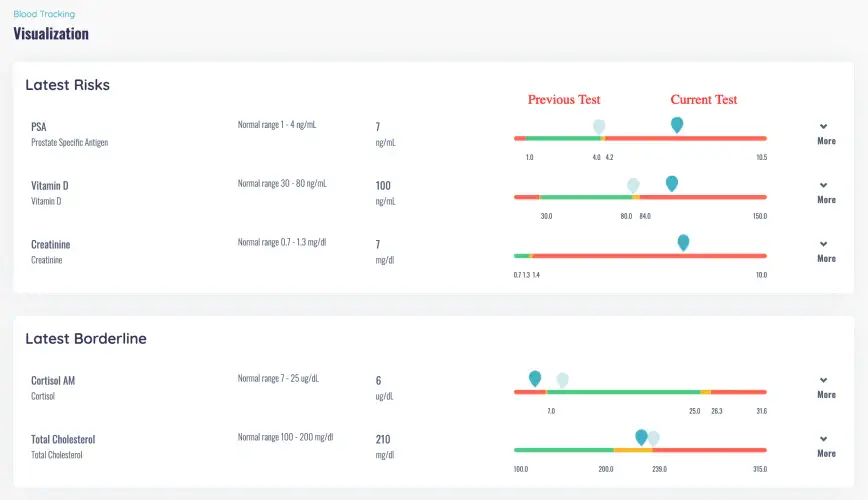
Tier 1: Standard Blood Biomarkers (PhenoAge)
You can estimate biological age using standard labs. Key markers include:
- Albumin: Reflects liver and kidney function.
- Creatinine: A marker of kidney health and muscle mass.
- High-Sensitivity C-Reactive Protein (hs-CRP): The gold standard for systemic inflammation.
- Alkaline Phosphatase: A proxy for liver and bone health.
Tier 2: Advanced Epigenetic Clocks
Tests like GrimAge or DunedinPACE analyze DNA methylation from a blood spot or saliva. These provide a “Pace of Aging” score, showing how fast you are aging right now.
Tier 3: GlycanAge
This measures the inflammation levels of your IgG antibodies. It is highly sensitive to lifestyle changes and often provides a very accurate “lifestyle age.”
Pillar 2: Nutritional Interventions for Epigenetic Health
Nutrition is the most direct way to provide “methyl donors” for your DNA.
The Protocol: DNA Methylation Support
- Methyl Donors: Increase intake of folate (B9), B12, and betaine. These provide the chemical tags needed to keep your “software” running correctly. (Sources: Spinach, beets, liver, and cruciferous vegetables).
- Cruciferous Power: Broccoli sprouts and kale contain Sulforaphane, which activates the Nrf2 pathway—your body’s strongest internal antioxidant defense.
- Polyphenol Loading: Quercetin (onions/apples) and Fisetin (strawberries) act as “senolytics,” helping the body clear out aged, senescent cells.
Pillar 3: Exercise as a Biological “Reset”
Exercise doesn’t just make you fit; it actually “cleans” your DNA.
The Strategy:
- Vigorous Intensity (HIIT): High-intensity work has been shown to increase mitochondrial capacity and lengthen telomeres in white blood cells.
- Strength Training: Maintaining muscle mass prevents the metabolic decline (insulin resistance) that is a primary driver of “accelerated aging.”
- The “Zone 2” Foundation: 150 minutes a week of low-intensity aerobic work stimulates Mitophagy—the recycling of old, tired mitochondria for new, energetic ones.
Pillar 4: Pharmacological and Supplemental Support
While lifestyle is the foundation, certain compounds are being studied for their ability to target the “Hallmarks of Aging.”
- NAD+ Boosters: NMN or NR supplements may help restore youthful levels of NAD+, supporting Sirtuin activity.
- Vitamin D3 + K2: Essential for maintaining “youthful” bone density and arterial flexibility.
- Omega-3 (High Dose): Reduces the “inflammaging” that accelerates the epigenetic clock.
- Magnesium: Required for the enzymes that repair damaged DNA.
Note: Always prioritize medical consultation before introducing longevity-specific supplements like NMN or Senolytics.

Practical Protocols: The Weekly “Age Reversal” Plan
This framework integrates the most high-leverage habits to keep your biological pace slow and steady.
| Day | Focus | Action Item |
|---|---|---|
| Mon / Wed | Methylation Support | High-folate intake + 45 min Strength Training |
| Tue / Thu | Mitochondrial Health | 45 min Zone 2 + 20 min Sauna (Heat Shock) |
| Friday | Cellular Autophagy | 16-hour fast + 20 min HIIT |
| Saturday | Structural Integrity | Outdoor activity (Vitamin D) + Yoga/Mobility |
| Sunday | Systemic Recovery | Zero-inflammation day (No alcohol/processed sugar) |
| Daily | The Basics | 8,000 steps + 7-8 hours sleep + 1g Omega-3 |
Frequently Asked Questions (FAQ)
How quickly can biological age change?
Epigenetic markers are dynamic. Some studies, such as the Trieschmann et al. (2021) “Helfgott” study, showed a reduction of 3 years in biological age after just 8 weeks of intensive diet, sleep, and exercise intervention.
Is biological age the same as “fitness age”?
No. Fitness age usually refers to your VO2 Max compared to your peers. Biological age is a more comprehensive look at your internal cellular and molecular health.
Does stress make you age faster?
Absolutely. Chronic stress accelerates “epigenetic weathering.” High cortisol levels accelerate DNA methylation aging, which is why stress management protocols (like those in our Recovery Guide) are essential for age reduction.
Can I reverse gray hair or wrinkles through these protocols?
While these protocols focus on internal organ and cellular health, many people report improved skin elasticity and energy levels. However, external signs of aging are often the last to change.
Final Thoughts and Next Steps
Biological age is perhaps the most honest “P&L statement” for your health. It cuts through how you feel or how you look and tells you exactly how your internal systems are performing.
Reducing your biological age is not about chasing immortality; it is about ensuring that your “functional” years—your ability to travel, lead, and engage with your family—remain at their peak for as long as possible.
Evidence & Citations
This article is based on scientific evidence and fact-checked by our editorial team. We prioritize peer-reviewed studies, clinical trials, and academic consensus.
- Horvath, S., & Raj, K. (2018). “DNA methylation-based biomarkers and the epigenetic clock theory of ageing.” Nature Reviews Genetics.
- Fitzgerald, K. N., et al. (2021). “Potential reversal of epigenetic age using a diet and lifestyle intervention: a pilot randomized clinical trial.” Aging.
- Belsky, D. W., et al. (2022). “DunedinPACE, a DNA methylation biomarker of the pace of aging.” eLife.
- Sinclair, D. A. (2019). Lifespan: Why We Age—and Why We Don’t Have To. Atria Books.