
This article contains affiliate links. If you buy through them, we may earn a commission at no extra cost to you. See our Disclosures.
Executive Summary
- The asset: one machine that trains legs, core, back and arms together, with almost no impact on your joints.
- The return: it builds cardiorespiratory fitness, one of the strongest predictors of long‑term survival, in sessions you can fit before the first meeting.
- The action: learn the stroke properly, then use steady sessions for your aerobic base and short intervals to raise the ceiling.
Most professionals do not lack motivation to train. They lack time, and the time they have is fragmented. That makes efficiency the deciding factor in choosing equipment. On that measure, the indoor rower is hard to beat: it delivers strength endurance and cardiovascular conditioning in a single session, in your own home, regardless of weather or travel schedule.
It is also routinely overlooked in favour of the treadmill. That is a missed opportunity.
Why Rowing Earns Its Place
1. A Full‑Body Return on Every Minute
Each stroke begins with a powerful leg drive, transfers force through a braced core, and finishes with the back and arms. Running and cycling are largely lower‑body activities; rowing recruits the posterior chain and upper body as well. For anyone who spends the working day seated and rounded over a laptop, that pulling pattern is a useful counterweight.
2. Cardiovascular Capacity: The Metric That Matters
Cardiorespiratory fitness is one of the most powerful predictors of how long, and how well, you live. In a study of more than 122,000 adults, the least fit carried a mortality risk comparable to, or greater than, smoking and diabetes.[1] Rowing is an efficient way to build it. Steady, conversational rowing is one of the easiest ways to accumulate Zone 2 training, while short, hard intervals help raise your VO2 max.
3. Low Impact, High Output
The seated, gliding motion keeps load off the knees, hips and ankles. That makes rowing a sustainable choice in midlife, when joint wear and old injuries often limit running volume. You can train hard without paying for it the next morning.
4. A Reset for an Overloaded Mind
Regular aerobic exercise is consistently linked with lower rates of depression and better stress regulation. Rowing adds a rhythmic, repetitive quality that demands just enough attention to crowd out rumination. Twenty minutes at a steady stroke rate is an effective way to close the laptop and change state before the evening.
5. Built for a Demanding Diary
A rower at home removes the commute to the gym, and most hotel gyms have one. Sessions are easy to scale: twenty minutes before work, forty on a weekend. A few sessions a week covers much of the Movement SOP minimum.
Strategic Briefing: A Simple Weekly Rowing Protocol
- Two base sessions: 30–45 minutes at a pace where you could still talk in full sentences (Zone 2).
- One interval session: after a 10‑minute warm‑up, 4–6 rounds of 3–4 minutes hard with equal easy rowing between.
- Technique first: legs, then body, then arms on the drive; reverse the order on the recovery. Most beginners pull too much with the arms and set the damper too high.
Choosing a Rowing Machine
There is a wide range of rowing machines at different price points. Prioritise a stable frame, a smooth and consistent resistance, and a monitor that shows pace and stroke rate, so you can train to specific intensities rather than guess.
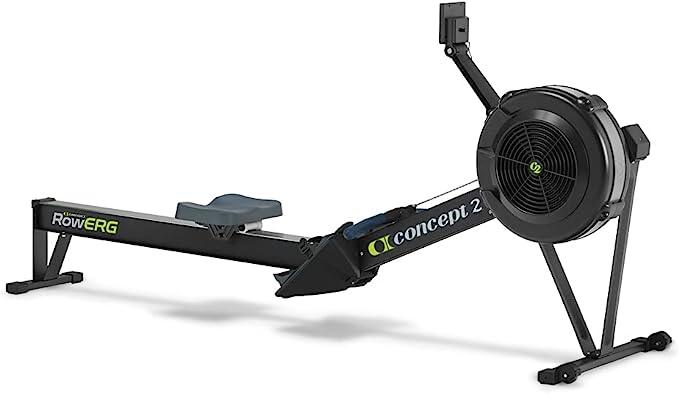
The benchmark is the Concept2, the machine used by rowing clubs and in indoor rowing championships. Its monitor data is a recognised standard, which makes it easy to follow structured programmes and track progress over time.
A strong alternative is the JTX Ignite AirX Rower from UK specialist JTX Fitness. It is a commercial-grade air rower, so resistance rises with your effort just as it does on the Concept2, and its console shows the pace and stroke data you need to train to specific intensities. JTX also has a showroom in West Sussex if you want to try before you buy.
For longer sessions, a seat pad makes a noticeable difference to comfort.
Learn the Stroke Before You Chase the Numbers
Good technique is what turns rowing into a full‑body workout rather than an arm and lower‑back strain. Invest ten minutes in learning the sequence and the right damper setting before you add intensity. We recommend RowAlong’s free coaching videos, which combine clear technique instruction with guided workouts: start with their indoor rowing technique guide, then explore the full RowAlong channel for follow‑along sessions.
The Bottom Line
The indoor rower is one of the most time‑efficient investments you can make in your physical capacity. It builds the aerobic base that underpins long‑term health, strengthens the muscles a desk job neglects, and does it without punishing your joints. Learn the stroke, protect two or three sessions a week, and let the compounding do the work.
Related: This briefing is part of the Body pillar. For how Mind, Body and Play fit together, see The Executive’s Guide to Healthspan.
This article is for general information and does not replace personalised medical advice. Speak to your GP before starting a new exercise programme, particularly if you have a medical condition. This article contains affiliate links; we may earn a commission if you buy through them, at no extra cost to you. It does not influence our recommendations. See our Disclosures.
Evidence & Citations
- Mandsager, K., Harb, S., Cremer, P., et al. (2018). “Association of cardiorespiratory fitness with long-term mortality among adults undergoing exercise treadmill testing.” JAMA Network Open. View Study
- Schuch, F. B., Vancampfort, D., Firth, J., et al. (2018). “Physical activity and incident depression: a meta-analysis of prospective cohort studies.” American Journal of Psychiatry. View Study