Executive Summary
The first 60–90 minutes of your day are not a warm-up — they are the configuration file for your entire neurochemical operating system. How you manage light, temperature, hydration, and caffeine in this window directly determines your cortisol rhythm, your dopamine baseline, and the integrity of your afternoon focus. The single highest-leverage move most executives overlook is sequencing: sunlight and adenosine clearance must precede caffeine, not the reverse. Get the order right, and you build a day of sustained, calm focus rather than frantic, caffeine-propped urgency that collapses by mid-afternoon.
The Reactive Trap: Why Most Mornings Sabotage the Day
The most common failure in executive performance is beginning the day in a reactive state — reaching for the phone before the brain has cleared sleep inertia. This single behaviour hijacks your dopamine system, binding your sense of reward to external demands (emails, Slack, markets) before you have set a single intention of your own.
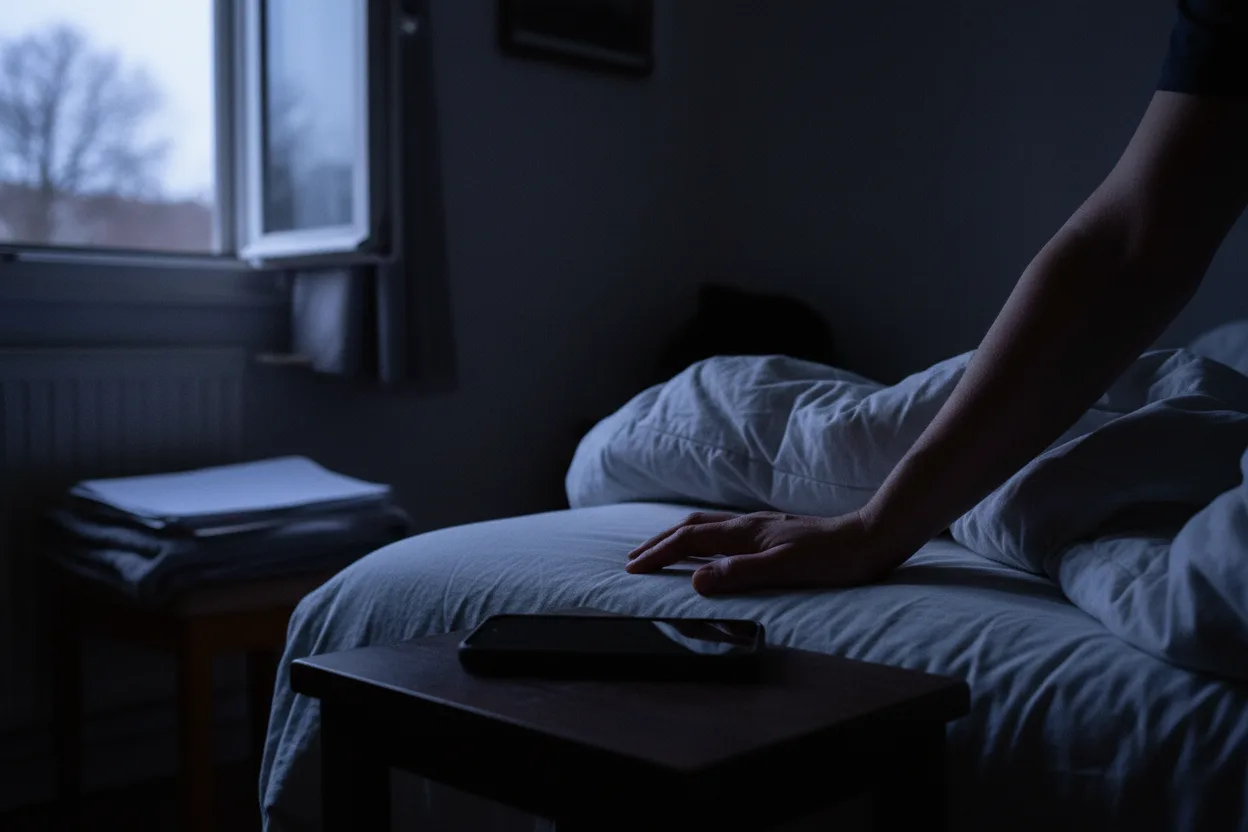
This matters biologically, not just philosophically. Checking your phone on waking spikes cortisol prematurely and in the wrong context. You want cortisol to rise — but you want it tethered to light, movement, and purposeful action, not to a notification telling you something has gone wrong overnight. The goal of this guide is to replace reactive neurochemistry with a deliberately engineered proactive sequence.
The Biology of Waking: Three Events You Must Manage
To design an intelligent routine, you need to understand what is actually happening inside your skull during the first hour. Three processes dominate.
1. Adenosine Clearance
Adenosine is the molecule of sleep pressure — it accumulates throughout your waking hours and is largely cleared during sleep. Crucially, remnants persist at waking. Caffeine does not remove adenosine; it merely blocks the receptors, masking the fatigue. Understanding this distinction is the key to the caffeine-timing protocol below.
2. The Cortisol Awakening Response (CAR)
Within 30–45 minutes of waking, healthy individuals experience a sharp, natural rise in cortisol of 50–75% above baseline. This is not pathological stress — it is adaptive. The CAR mobilises energy, sharpens attention, and primes the prefrontal cortex. Your job is to reinforce this peak with the right inputs, chiefly light and movement, so cortisol crests cleanly and declines on schedule into the evening.
3. The Circadian Reset
Your master clock — the suprachiasmatic nucleus of the hypothalamus — requires a daily “start” signal to calibrate metabolism, mood, hormone release, and, critically, that night’s sleep. The dominant signal it reads is light. Miss this signal, and the entire downstream cascade drifts.
Pillar 1: The Photonic Anchor — Light Exposure
Light is the most powerful Zeitgeber (“time-giver”) available to you, and it is free. The work of Czeisler and Duffy at Harvard, and more recently popularised by Andrew Huberman at Stanford, established that early light exposure is the dominant lever for circadian health.
The Protocol
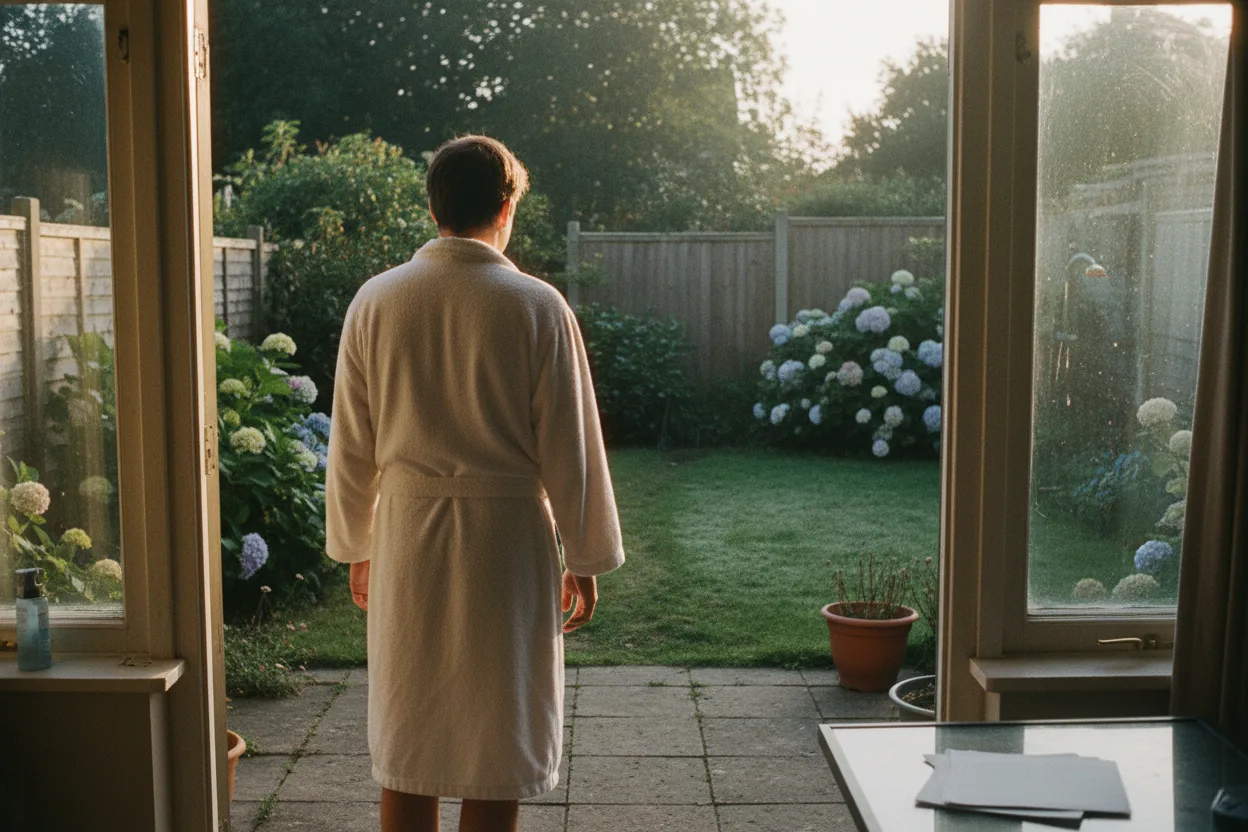
- Action: Get 5–10 minutes of direct outdoor light within 30–60 minutes of waking. On an overcast day, extend to 15–20 minutes — cloud cover reduces lux dramatically.
- The science: Morning light triggers cortisol release, suppresses residual melatonin, and — remarkably — sets a timer in your brain that governs melatonin onset roughly 16 hours later. Your evening sleep quality is partly determined at breakfast.
- The executive pivot: If you wake before dawn or live in a dark northern climate, deploy a 10,000-lux light box for 20 minutes while you hydrate or plan your day. Do not look directly into any light source — simply let it fill your visual field. And never wear sunglasses during this window; the signal must reach the retina.
Pillar 2: Hydration First
After seven to eight hours of respiration and overnight repair, you wake measurably dehydrated. Research on cognitive performance shows that a fluid deficit of just 2% of body mass degrades processing speed, working memory, and attention — precisely the faculties a leader relies upon.
The Protocol
- Action: Drink 500ml–1L of water on waking, with a pinch of quality sea salt or an electrolyte sachet.
- The science: Sodium drives water into cells via osmosis rather than letting it pass straight through. This supports blood volume, stabilises blood pressure, and ensures cerebral perfusion — the physical delivery of oxygen and glucose to the brain that cognition depends on.
Pillar 3: Delayed Caffeine — The 90-Minute Window
This is the single most impactful change most executives can make, and it costs nothing.
The Protocol
- Action: Delay your first caffeine intake until 90–120 minutes after waking.
- The science: Drink coffee immediately and caffeine occupies adenosine receptors before your morning cortisol has cleared the residual adenosine. The molecule remains in circulation, dammed up behind the blockade. When the caffeine wears off mid-afternoon, that accumulated adenosine floods the newly vacated receptors — the classic 2pm crash. Delaying caffeine allows natural clearance first, then uses the compound to extend alertness rather than fight sleep pressure.
- The executive pivot: If a hard cut-off feels brutal, begin by delaying 30 minutes and extend weekly. Protect the back end too — caffeine has a quarter-life of up to 10–12 hours, so a 4pm espresso still has pharmacologically active levels in your system at midnight.
Pillar 4: Thermal and Physical Sparks
Brief, deliberate stress tells the nervous system the day has begun.
Cold Exposure
A 1–3 minute cold shower or deliberate cold plunge triggers a sustained release of dopamine and noradrenaline. Research by Šrámek and colleagues documented dopamine elevations of roughly 250% above baseline following cold-water immersion — and, crucially, this rise is slow and sustained, delivering several hours of clean, calm focus rather than a spike-and-crash. Unlike caffeine, cold raises your dopamine baseline rather than borrowing against it.
Movement
Five to ten minutes of Zone 1–2 movement — a brisk walk, mobility work, light calisthenics — increases blood flow to the prefrontal cortex and flushes the last of your sleep inertia. Combine it with your light exposure and you collapse two pillars into one efficient block.
Pillar 5: The Deep Work Block
Your first 90 minutes of cognitive work occur when prefrontal resources are richest and willpower is undepleted. Squandering this window on email is a strategic error.
- Eat the frog: Attack the single most cognitively demanding, strategically important task first — before the day’s reactivity can colonise your attention.
- Phone isolation: Put the device in another room or a locked focus box. Proximity alone degrades cognition; studies show the mere presence of a smartphone on the desk reduces available working-memory capacity.
- The Top 3: Execute against the three priorities you defined the previous evening during your shutdown ritual. Decision-making at 6am should be execution, not deliberation.
The 20-Minute Essentials Routine
When time is compressed, this protocol captures roughly 80% of the biological benefit.
- 0–5 min: Hydration plus electrolytes — cellular rehydration.
- 5–15 min: Walk outside in natural light — circadian reset and CAR reinforcement.
- 15–20 min: Cold shower, 1–2 minutes — dopamine and focus elevation.
- Work start: 90-minute deep work block — maximise cognitive output while caffeine stays holstered.
Frequently Asked Questions
What about breakfast?
This depends on your metabolic and training goals. For many executives, time-restricted feeding — delaying the first meal — preserves morning clarity by keeping insulin low and fat oxidation high. However, if you carry a significant training load or are actively building muscle, prioritise a 30g+ protein breakfast to support muscle protein synthesis and offset age-related sarcopenia. Fasting is a tool, not a religion; match it to your objective.
Is it acceptable to check the news?
Avoid news and social media for the first 60 minutes. These feeds are engineered to provoke micro-anxiety, which spikes cortisol in the wrong context and shunts you from a proactive into a reactive state before you have set your own agenda.
I have young children. How is this realistic?
Wake 30 minutes before your children. That quiet window — even compressed to hydration, a few minutes of light at the window or doorstep, and a short cold rinse — lets you anchor your biology before domestic demand takes over. Imperfect execution beats none.
Does a morning workout replace the need for light?
No. Indoor exercise delivers excellent blood flow and endorphins but not the photonic signal your suprachiasmatic nucleus requires. Train outdoors where possible, or bookend an indoor session with at least 5 minutes of outdoor sky-viewing.
The Bottom Line
- Sequence over substance: Light and adenosine clearance must precede caffeine. Get the order right and you eliminate the afternoon crash.
- Hydrate before you caffeinate: 500ml–1L of water with salt on waking restores the cognitive edge dehydration silently erodes.
- Delay caffeine 90–120 minutes: The single cheapest, highest-return change you can make this week.
- Use cold deliberately: 1–3 minutes of cold raises dopamine baseline for hours of clean focus — no stimulant required.
- Protect the first 90 minutes: Phone in another room, hardest task first. Your prefrontal cortex is never more capable than it is now.
Evidence & Citations
- Duffy, J. F., & Czeisler, C. A. (2009). “Effect of Light on Human Circadian Physiology.” Sleep Medicine Clinics. View Study
- Clow, A., Hucklebridge, F., Stalder, T., Evans, P., & Thorn, L. (2010). “The cortisol awakening response: More than a measure of HPA axis function.” Neuroscience & Biobehavioral Reviews. View Study
- Šrámek, P., Šimečková, M., Janský, L., Šavlíková, J., & Vybíral, S. (2000). “Human physiological responses to immersion into water of different temperatures.” European Journal of Applied Physiology. View Study
- Riedy, S. M., Smith, M. G., Rocha, S., & Basner, M. (2021). “Noise as a sleep aid: A systematic review.” Sleep Medicine Reviews. View Study
- Adan, A. (2012). “Cognitive performance and dehydration.” Journal of the American College of Nutrition. View Study
- Drake, C., Roehrs, T., Shambroom, J., & Roth, T. (2013). “Caffeine effects on sleep taken 0, 3, or 6 hours before going to bed.” Journal of Clinical Sleep Medicine. View Study
- Ward, A. F., Duke, K., Gneezy, A., & Bos, M. W. (2017). “Brain Drain: The Mere Presence of One’s Own Smartphone Reduces Available Cognitive Capacity.” Journal of the Association for Consumer Research. View Study
- Blume, C., Garbazza, C., & Spitschan, M. (2019). “Effects of light on human circadian rhythms, sleep and mood.” Somnologie. View Study