
Executive Summary
- The shift is real: hormonal changes in midlife (such as perimenopause) can make standard diet and exercise feel less effective.
- Beyond weight: berberine helps stabilise blood sugar, which supports steadier energy and clearer focus.
- Why “Advanced”? Standard berberine is poorly absorbed. Newer forms use phytosome technology designed to improve how much your body actually takes up.
If you’ve noticed that the strategies you relied on in your 30s just aren’t shifting the needle any more, you aren’t alone. Between career peaks, family changes and biological shifts, our metabolic engine often needs a retune.
For many of us aged 45 to 60, weight gain (specifically around the midsection) often arrives hand in hand with afternoon energy slumps and brain fog. Today, we’re looking at Berberine Advanced not as a magic diet pill, but as a tool for metabolic resilience.
The Bioavailability Hurdle: Working Smarter, Not Harder
As professionals, we value efficiency. The problem with standard berberine supplements is that they are notoriously inefficient; our bodies struggle to absorb them. You might be taking a supplement, but if it isn’t getting into your system, it’s just added noise.
Berberine Advanced addresses this with phytosome technology. Put simply, it wraps the active compound in phospholipids (similar to our own cell membranes), which is designed to help it get past the digestive hurdles that limit standard berberine.
Your Internal “Energy Thermostat” (AMPK)
Why does this matter for burnout and brain fog? Berberine activates an enzyme called AMPK. Think of AMPK as your body’s energy thermostat.
In our youth, this thermostat is sensitive: it switches effortlessly between burning fat and sugar for fuel. As we enter midlife (and especially during perimenopause or high‑stress periods), this switch can get stuck.
Strategic Briefing: When We Reactivate This Switch, We Support
- Steady energy: smoothing out post‑lunch crashes so you can finish the workday strong.
- Cognitive clarity: stable blood sugar means a stable brain, reducing decision fatigue.
- Physical resilience: helping the body manage glucose more effectively, which is often challenged by hormonal shifts.
What the Data Says (Realistically)
Let’s manage expectations. This isn’t about rapid, unsustainable transformation; it’s about regaining stability. A 2020 meta‑analysis of 12 randomised controlled trials found that berberine supplementation was associated with:
- Modest weight support: an average reduction of around 2 kg in body weight compared with control.
- Waistline changes: a small reduction in waist circumference (around 1 cm), often the most stubborn area during midlife transitions.
- Lower inflammation: a reduction in C‑reactive protein (CRP).
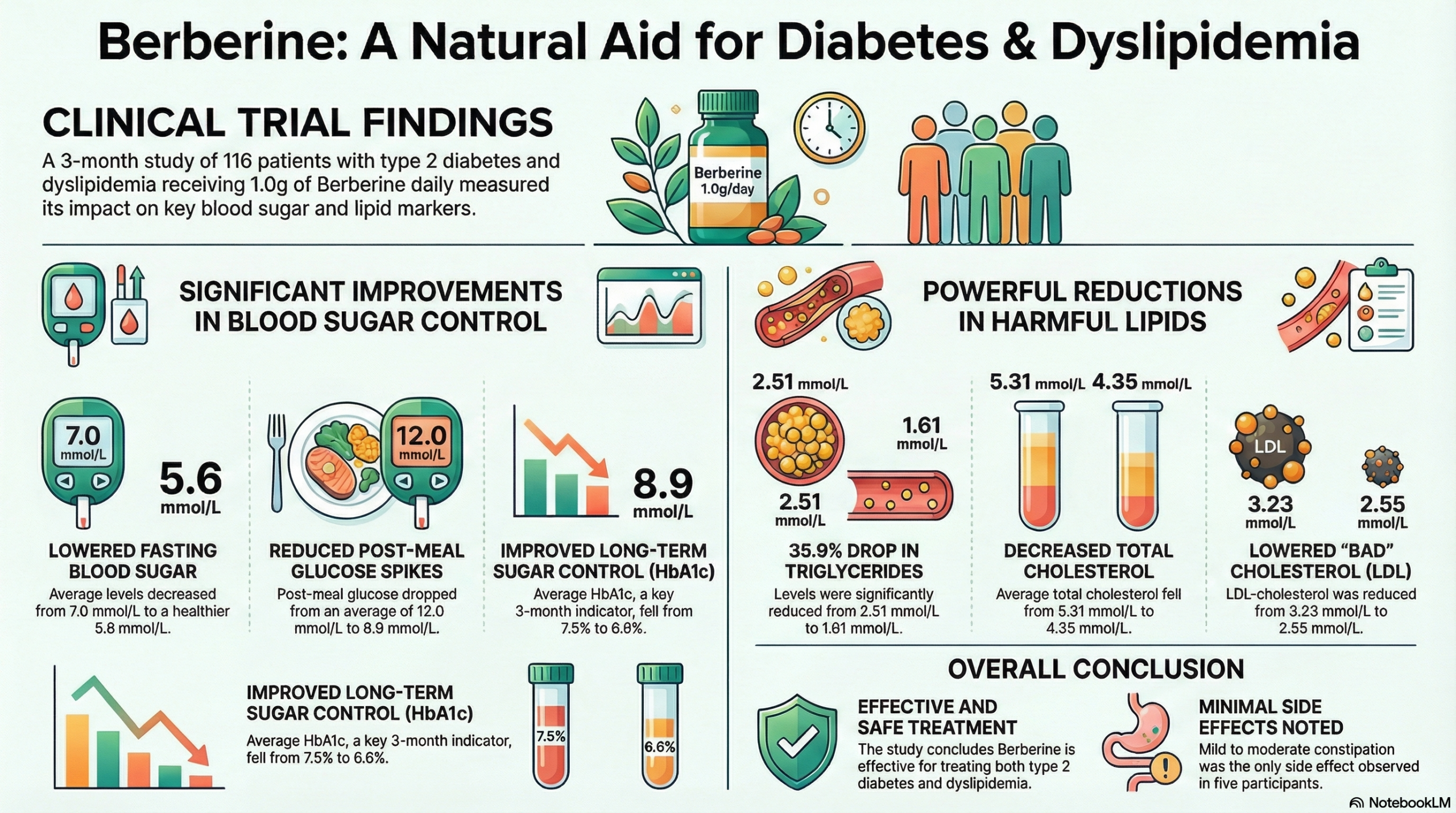
Earlier trial data in people with type 2 diabetes also showed meaningful improvements in fasting glucose, HbA1c and blood lipids. Think of it as clearing the metabolic noise so your healthy habits (sleep, movement, nutrition) can actually work again.
Safety & Nuance
At this stage of life, we often manage more complexity in our health. Please prioritise safety. Berberine interacts with liver enzymes, which means it can affect how other medications work (including blood pressure medication and blood thinners), and it can add to the effect of glucose‑lowering drugs.
Always check with your GP or pharmacist first; view them as a partner in your performance strategy.
The Bottom Line
Berberine Advanced isn’t just about the number on the scale. It’s about building a body that feels resilient enough to handle the demands of your career and life: clearing the fog and reclaiming your energy. For how it fits alongside other evidence‑based options, see the Executive Supplement Stack.
Related: This briefing is part of the Body pillar. For how Mind, Body and Play fit together, see The Executive’s Guide to Healthspan.
Evidence & Citations
- Zhang, Y., Li, X., Zou, D., et al. (2008). “Treatment of type 2 diabetes and dyslipidemia with the natural plant alkaloid berberine.” Journal of Clinical Endocrinology & Metabolism. View Study
- Asbaghi, O., Ghanbari, N., Shekari, M., et al. (2020). “The effect of berberine supplementation on obesity parameters, inflammation and liver function enzymes: a systematic review and meta-analysis of randomized controlled trials.” Clinical Nutrition ESPEN. View Study
- Ilyas, Z., Perna, S., Al-Thawadi, S., et al. (2020). “The effect of Berberine on weight loss in order to prevent obesity: a systematic review.” Biomedicine & Pharmacotherapy. View Study