The Problem: The Desk-Bound Liability
The modern corporate environment forces the body into unnatural, chronic positions. Sitting at a desk or in boardrooms for 10 hours a day creates a cascade of biomechanical failures:
Accelerated Sarcopenia: Beginning in our 30s, we lose 3-5% of our muscle mass per decade if untrained. Because muscle acts as a “metabolic sink” that absorbs blood glucose, losing muscle directly degrades your metabolic health.
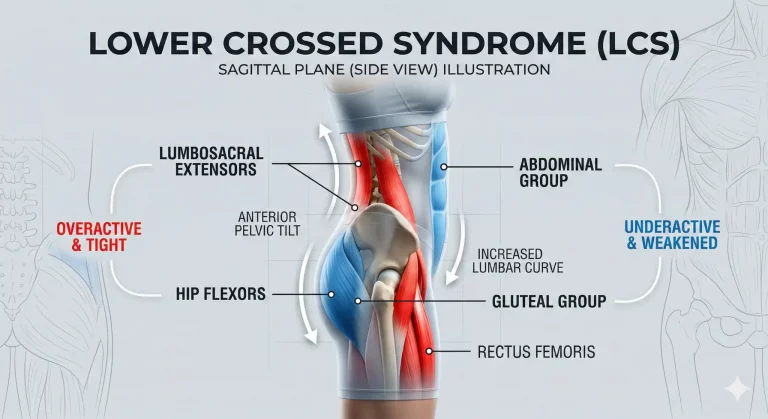
Postural Degradation: Chronic sitting shortens the hip flexors, weakens the posterior chain, and places destructive shear force on the lumbar spine.
The Solution: The High-ROI Training Protocol
High-performing professionals do not have 10 hours a week to spend in the gym. The goal is the minimum effective dose—extracting the maximum biological return on your time investment. The protocol is divided into three non-negotiable pillars:
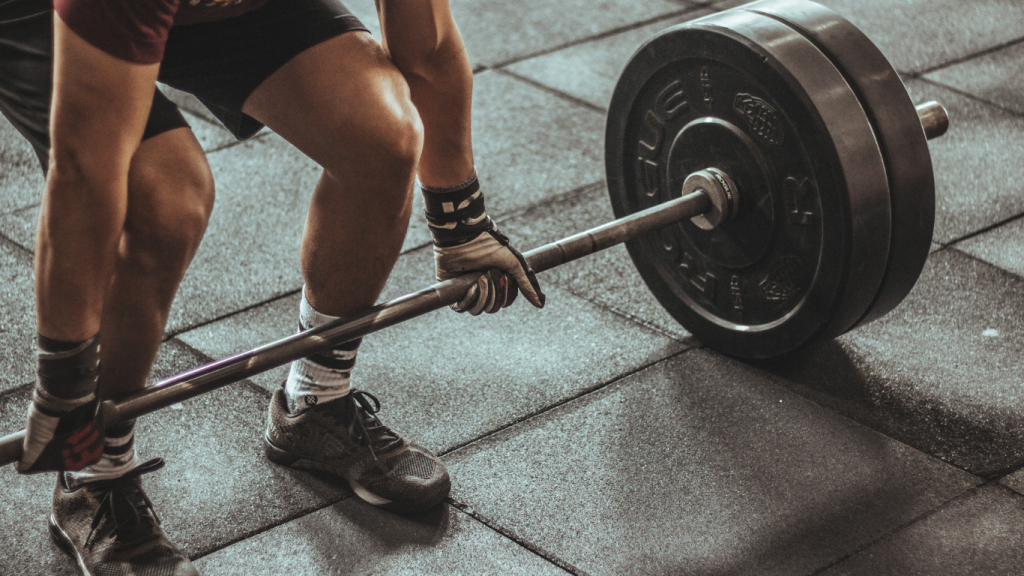
1. Resistance Training (Structural Integrity) Lifting heavy weights is not about bodybuilding; it is about protecting your skeletal architecture. Mechanical tension forces the body to increase bone mineral density and synthesize new muscle tissue.
The Protocol: Focus strictly on multi-joint compound movements (squat, hinge, push, pull, carry). Two to three highly focused, 45-minute sessions per week are enough to arrest sarcopenia and build a resilient frame.
2. Cardiovascular Capacity (The Aerobic Engine) Your cardiovascular system dictates your cognitive stamina. We measure this through two specific modalities:
Zone 2 Cardio: Low-intensity, steady-state training (where you can just barely hold a conversation). This builds cellular mitochondria, allowing your body to produce energy efficiently without fatigue.
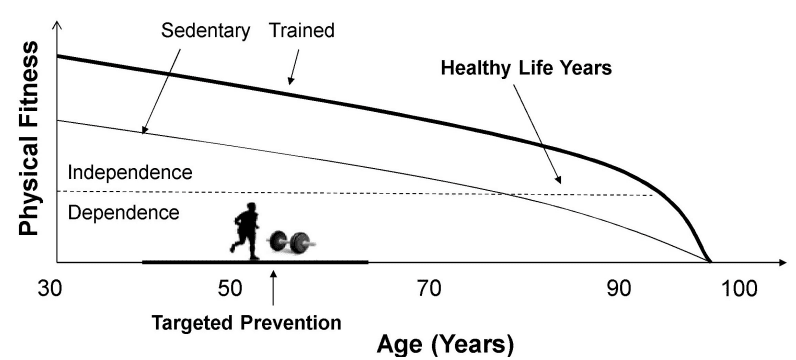
VO2 Max: The maximum rate at which your body can utilize oxygen. Clinical data shows that a high VO2 Max is one of the single strongest predictors of longevity and delayed all-cause mortality.
Figure 1: Hypothesis of physical fitness (cardiorespiratory fitness and muscle strength) on Healthy Life Years (disability-free life expectancy) in trained versus sedentary subjects. The dotted line represents the prognostic exercise capacity generally necessary for an independent lifestyle and associated with an increased risk for mortality. The cut-off values are: 17.5. ml/kg/min (5 METs) for aerobic capacity (28); 30 kg and 18 kg for grip strength in men and women aged over 65 years, respectively (42).
Strasser, B., & Burtscher, M. (2018). Survival of the fittest: VO2max, a key predictor of longevity? Frontiers in Bioscience-Landmark, 23(8), 1505–1516. View Study
3. Biomechanics & Mobility (Joint Architecture) You cannot execute a high-stress role if you are in chronic, low-grade physical pain. Daily mobility work is the maintenance required to keep the machine running.
The Protocol: Dedicate 10 minutes daily to functional end-range movements, focusing on thoracic spine mobility, hip openers, and ankle dorsiflexion. This mitigates the damage of the desk-bound posture.
Figure 2: The Biomechanics of Desk Posture: Understanding Lower Crossed Syndrome
This anatomical illustration provides a sagittal (side-view) breakdown of Lower Crossed Syndrome (LCS), a structural muscle imbalance commonly resulting from poor posture and prolonged sitting. The diagram visually maps the “cross” pattern of muscular dysfunction that frequently leads to chronic lower back pain in corporate environments
Mehta, T. B., & Sharma, A. (2024). Lower cross syndrome: specific treatment protocol versus generalized treatment protocol. A randomized single-blinded trial. Folia Medica, 66, 662–672. View Study.
The Biological ROI
When you apply data-driven rigor to your physical training, the results transcend the gym:
Injury Resistance: A stronger physical frame prevents the sudden, debilitating injuries (like blown lumbar discs) that pull executives out of their lives and careers.
Cognitive Stamina: A highly developed aerobic base ensures your brain receives optimal blood flow and oxygen, preventing the 3:00 PM cognitive crash.
Lifelong Independence: Functional strength is the difference between thriving in your 70s and 80s versus relying on others for daily tasks.