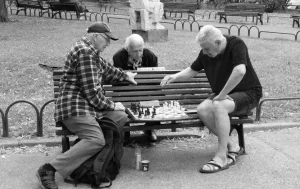
Social Connection & Vitality: Protecting Your Support Architecture
The Executive Summary Executive isolation is not a lack of people; it is a lack of non-transactional connection. Clinical data confirms that chronic loneliness is as biologically damaging as smoking 15 cigarettes a day—accelerating cognitive decline and driving systemic inflammation. This protocol treats high-quality social connection as a mandatory biological input, essential for buffering the physiological wear-and-tear of high-stakes leadership.
The Problem: The Transactional Trap
As your professional network expands, your “biological tribe” often shrinks. Most executive interactions are performance-based—you are managing, negotiating, or leading.
The Cognitive Burden: Maintaining a professional “mask” requires constant vigilance, keeping the nervous system in a chronic state of low-grade stress.
The Biological Cost: Without a secure, non-work social circle, the brain views the environment as “unsafe.” This triggers a rise in C-Reactive Protein (CRP), a primary marker for cardiovascular disease and systemic inflammation.
The Social Vitality Protocol
Social health is not about “networking.” It is about engineering environments where your professional identity is irrelevant.
1. Identity De-Coupling
You need spaces where you are valued for your presence, not your corporate output.
The Action: Engage in a group activity (a sport, community group, or hobby) where your job title holds no currency. Removing the “High-Performance Mask” for even 90 minutes provides a profound reset for the nervous system.
2. The Micro-Community Strategy
In biological terms, depth exponentially outperforms breadth. A LinkedIn network of thousands offers zero physiological ROI compared to a few deeply trusted peers.
The Action: Actively curate a small group of 3–5 peers where vulnerability carries no professional penalty. Having a space to discuss burnout or failure without consequence is your strongest defense against executive isolation.
3. Shared Friction (The Oxytocin Trigger)
The fastest way to bond human nervous systems is through shared, non-work challenges.
The Action: Replace the “passive drink” with “active friction.” Hike, train, or learn a complex skill with a peer. Overcoming a physical or mental obstacle together releases Oxytocin, a neurochemical that acts as a natural antagonist to cortisol.
The Biological ROI
The Cortisol Buffer: High-quality social interaction physically lowers your heart rate and shuts down the “fight or flight” response.
Immune Resilience: Strong social ties are clinically linked to lower levels of inflammation and more robust immune function.
Cognitive Defense: Free-flowing, authentic conversation is a complex neural workout that protects memory centers from age-related decline.

Evidence & Citations
This article is based on scientific evidence and fact-checked by our editorial team. We prioritize peer-reviewed studies, clinical trials, and academic consensus.
Holt-Lunstad, J., et al. (2010). “Social Relationships and Mortality Risk: A Meta-analytic Review.” PLOS Medicine. View Study
- Eisenberger, N. I. (2012). “Social neuroscience and health: neurophysiological mechanisms linking social ties with physical health.” Nature neuroscience. View Study
Cacioppo, J. T., & Cacioppo, S. (2014). “Social Relationships and Health: The Toxic Effects of Perceived Social Isolation.” Social and Personality Psychology Compass. View Study